


Section titled module-2
Why it’s important
What we can do
How we'll measure progress
Why it’s important
What we can do
How we'll measure progress
Section titled why-its-important
Why it’s important
Enablers such as estates, workforce, digital capabilities, safeguarding and medicine optimisation are important within the NHS because they support the delivery of safe, effective, and efficient services, enhance patient experience and outcomes, and contribute to the overall resilience and sustainability of the health and care system. Investing in these areas is critical for addressing current and future health and care challenges and ensuring equitable access to high-quality care for local people.
Our trauma-informed approach is another key enabler, and you can find out more about this on our Trauma-informed page.
Section titled what-we-can-do
What we can do
Strategies and programmes have been put in place across our enabling functions to provide a foundation to deliver improvements to the health and care system. For example, from a people perspective, we are focused on retaining and reducing staff vacancies. In Bristol, North Somerset and South Gloucestershire we have the 10th lowest vacancy rate when compared with all ICSs across England.
We have developed an Infrastructure Strategy following a series of workshops with system partners. This will help guide our plans to establish a resilient, effective and sustainable healthcare infrastructure. We have also published a revised Green Plan to help us deliver on our sustainability commitments.
From a digital perspective we will continue to deliver on integrating our IT infrastructure across our organisations, establish a system-wide Data Sharing Charter and refresh our Digital Inclusion Strategy.
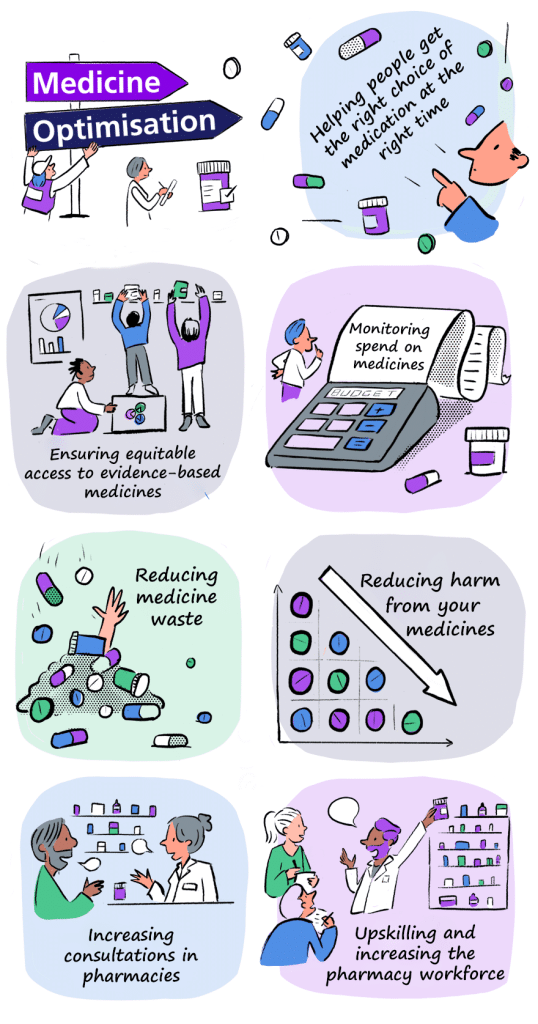
Within Medicines Optimisation, we will continue to drive forward initiatives aligned with system priorities, including the Pharmacy First scheme, implementing new recommendations for asthma treatment and reducing medicines waste.

Section titled how-well-measure-progress
How we’ll measure progress
We have a wide range of targets across our enabling services, which we will measure to ensure progress.
This includes targets within medicine optimisation, such as measuring safe and appropriate antibiotic prescribing to help reduce antibiotic resistance, and measuring the number of people on the right medication to reach their target blood pressure.
We will work with our VCSE partners to update our Digital Inclusion Strategy in 2025.
From a sustainability perspective, partners have also been working towards ambitious goals such as:
- Achieve net zero carbon across all health and care emissions by 2030
- Ensure all suppliers share our net zero emissions by reducing their own carbon emissions by 2030
- Create a system-wide movement to support a sustainability culture change.
This page provides an overview. To read about our plans in detail, take a look at the full Joint Forward Plan 2025 to 2030.
Joint Forward Plan 2025 to 2030Section titled module-6
Strategic Commitments
Align everything we do to the outcomes we want
Demonstrate our system-wide commitment to prevention
Focus on the first 1,001 days to give our children the best start
Change how we work to reduce health inequalities actively
Prioritise the health impacts of poverty and disadvantage
Build a workforce who are supported, skilled and healthy
Focus on the whole person – not just the disease
Work together as equal partners to tackle our biggest problems
Support the economy with our purchasing and employment practices
Develop a better, healthier environment for people to live in
Outcomes Framework
The healthy life expectancy of our population
The health and wellbeing of our population
The health of services
The health and wellbeing of our staff
The health and wellbeing of our communities
The health and wellbeing of our environment
Section titled module-7
The Strategic Commitments and Outcomes Framework tick boxes show a brief summary of how different areas of work contribute to our wider strategic aims and outcomes.
Outcomes framework – We use a system outcomes framework to measure our progress. Each outcome has linked indicators designed to monitor our progress and link it back to our strategic objectives.
Strategic commitments – These are the nine commitments we made in our Integrated Care System Strategy to transform our services.