Women’s health
Note: although we use the term women we recognise that trans, non-binary, intersex and gender-expansive people require women’s health services and we are working to ensure services are accessible and inclusive for all.


Note: although we use the term women we recognise that trans, non-binary, intersex and gender-expansive people require women’s health services and we are working to ensure services are accessible and inclusive for all.
The Women’s Health Strategy for England was published in 2022. The strategy set out a ten-year plan for improving women’s and girls’ health and wellbeing, including developing Women’s Health Hubs across England.
The national guidance on Women’s Health Hubs outlines eight core service areas:
We used the one‑off Women’s Health Hub funding to improve our existing women’s health services. These investments will help make our care more effective, supportive and easier to access.
GP surgeries already provide a lot of women’s health services. However, provision varies between practices. For example, overall, general practices in Bristol, North Somerset and South Gloucestershire fit more long-acting reversible contraception (coils and implants) than the England average. However, some practices only have one member of staff who is qualified to fit contraceptive devices, which can lead to long waiting times. Coils and implants are not only used for contraception. They can also help manage heavy periods.
We also know that knowledge and experience in providing menopause care varies between clinicians. The Healthwatch report on menopause care experiences highlights gaps in care.
We have worked with groups of general practices called Primary Care Networks (PCNs) to improve women’s health services. PCNs reviewed their current services to understand their strengths and areas for improvement, then implemented changes to provide better care.
“So very helpful, I really appreciate your time and effort tonight’ and ‘This has been so informative, thank you ladies!”
Made Hormone Replacement Therapy (HRT) reviews as effective as possible by training clinical pharmacists to undertake reviews and using text messages to communicate about the review. Read more about HRT on NHS UK.
We aimed to improve access to and the quality of women’s health services for those who need them most. This includes people who are considered part of inclusion health groups.
Inclusion health is an umbrella term used to describe people who are socially excluded, who typically experience multiple overlapping risk factors for poor health, such as poverty, violence and complex trauma. People in inclusion health groups tend to face significant barriers to accessing and navigating mainstream health services.
We awarded 11 small grants to local organisations and community groups who have trusted relationships with people in the following inclusion health groups:
Read about what each grant involved on our inclusion health grant page.
Working with the Bristol and South Gloucestershire signposting website WellAware, we have created a Women’s Health resource directory.
The directory brings together a range of trusted information and local support services on topics including menstrual health, contraception, menopause, and cervical screening. It’s been developed with input from local clinicians, VCSE partners, and public contributors to ensure it reflects the needs of local communities.
Visit the women's health directory on WellAware
Working with community radio station BCfm, we have created a six-part podcast series designed to give women and those who support them clear, jargon-free guidance on key health topics.
Each short episode tackles a different subject – menopause, periods, cervical screening, contraception, pelvic health and sexual health – featuring local expert guests, sharing honest experiences, and signposting to local support.
You can listen now on Spotify, Apple Podcasts, Amazon Music and YouTube.
Confident and competent professionals are essential for high quality healthcare. Training and education sessions are an effective way of staying up to date with clinical guidance and best practice. It can also be helpful for professionals to talk and work together across different organisations and specialisms.
We promoted existing free and low-cost training resources and opportunities with our local professionals.
We funded a Menopause Training Clinic in the menopause service at St. Michael’s Hospital, Bristol (part of University Hospital Bristol and Western NHS Foundation Trust). This clinic enabled six GPs working in deprived areas to increase their skills in menopause care.
We provided online and in-person training and education sessions for healthcare professionals. Topics included:
Experiences of trauma and adversity can have a profound and wide-reaching impact on the lives of individuals, families and communities. These experiences can influence people’s interactions and how they interpret the world and their surroundings.
A trauma-informed approach acknowledges the prevalence of trauma in society, recognises the signs and symptoms of trauma and resists re-traumatising people. You can read more about trauma-informed practice on our Trauma-Informed Practice page.
We know that experiences of trauma can make accessing healthcare difficult for some women, especially when it comes to invasive procedures such as having a cervical screening or a contraceptive device fitted. Healthwatch Essex’s video on trauma and cervical screening illustrates the importance of a trauma-informed approach.
We ran a nine-month programme providing trauma-informed practice learning sessions for staff in GP surgeries, Sexual Health (Yuno) and Gynaecology.
Many staff reported that the training made them confident in understanding trauma in their healthcare service and how they can support people who may have experienced trauma. Here are some of the things that healthcare professionals will do better as a result of the training:
We set up an expert Women’s Health Working Group to develop the above plans and support implementation. The group met monthly for one year. Membership included:
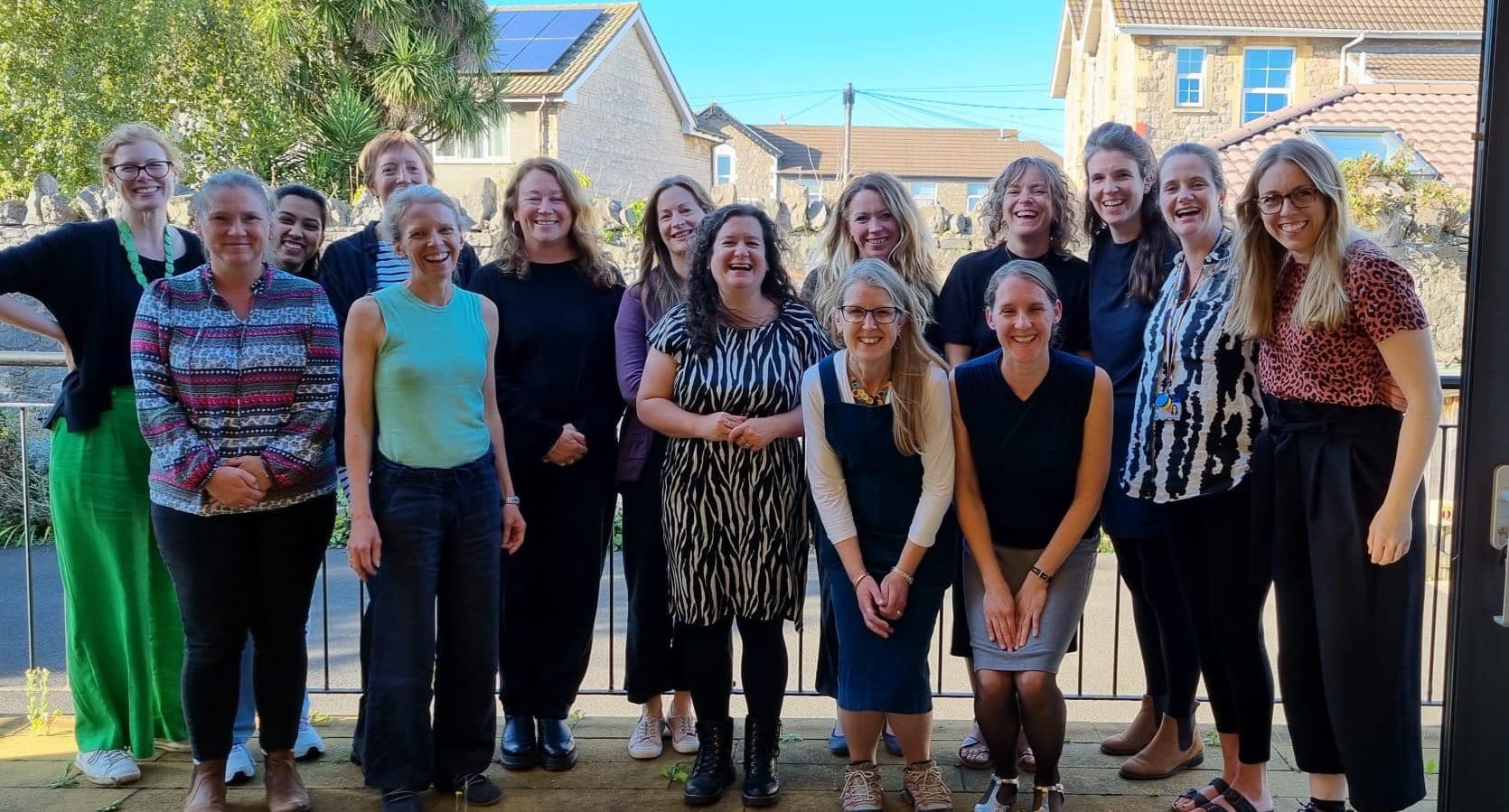
Photo: some of the Women’s Health Working Group members.
It is key that the Bristol, North Somerset and South Gloucestershire Women’s Health programme is driven by input from local people.
We have used local reports and insights from local people to shape our plans. For example:
We appointed two public contributors to our Working Group and supported them to contribute to the Group’s plan to improve services in Bristol, North Somerset and South Gloucestershire.
Our work to improve outcomes for women from inclusion health groups was informed by engagement and co-design of services with people from these groups.
Some of the Primary Care Network (PCN) plans involved engagement with their local communities to help ensure that the changes they make to women’s health services in their area meet the needs of local people.
For more information, contact the team via the Bristol, North Somerset and South Gloucestershire Women’s Health email bnssg.womenshealth@nhs.net