Contents
- Overview
- Why it's important now
- Our population
- Our first cohort
- Our commitments



Contents
This page provides a summary of our Healthier Together 2040 strategic intentions: Strategic intentions for working age adults with long term conditions
Healthier Together 2040 started from a shared recognition that for people’s health outcomes to improve, the health and care system needs to fundamentally change how it approaches delivering, measuring and paying for services. With significant expertise and resource available by working together, we sought to reimagine health and care, working with people and understanding all their needs, hopes, and what matters most to them.
We identified four groups of the population who are currently or at risk of experiencing the poorest outcomes, then started with a focus on working-aged people living with multiple health challenges.
Through extensive listening and insight gathering, we learned that meaningful change requires moving beyond reactive, condition-focused services and creating support that is compassionate, preventative and rooted in relationships.
While Healthier Together 2040 started before the NHS 10-year plan publication, many of the elements developed through the design process have aligned with the national policy. For example, the co-creation of personalised wellbeing plans, connecting people to wider support, and embedding specialists locally to reduce hospital reliance.
We will offer flexible, neighbourhood-based care for working-aged adults with multiple health needs. Integrated teams will connect clinical care with wider support, like housing, employment and financial advice.
Care will be proactive, using community hubs, outreach and digital tools to prevent crisis. This approach aims to reduce unplanned care, ease pressure on services, and help people live healthier lives while reducing inequalities.
We will put in place systems to help neighbourhood teams provide joined-up, person-centred care. Staff will have the tools and information they need to track how people and communities are doing, see what’s working, and make improvements. The system will support learning, build trust, and help staff work well together while focusing on what matters most to people.
Funding will move towards outcomes-based models, beginning with Year of Care payments that bring together primary, community, mental health, outpatient, and emergency care into a single annual budget per person. Personal health budgets will be explored to give individuals more control, while VCSE partners will be supported with stable, long-term contracting arrangements.
A population health intelligence system will be developed to share data transparently across the system, combining clinical records with patient-reported outcomes and community insights. Interoperable systems, AI, and digital tools will help identify risks early and provide support quickly, close to home.
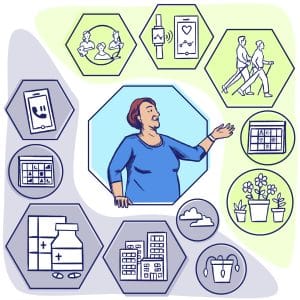
We will focus on what matters most to people, such as how they feel, function, and manage their health, as well as wider community measures like life expectancy. This information will guide personal wellbeing and health plans and may include new sources of information, including data from health-tracking devices.
A digital taskforce will co-design solutions with service users and partners, ensuring services work together through connected records and human-centred design. To avoid digital exclusion, VCSE partners will support equitable access. Digital platforms will promote self-management, link to community resources, and connect people seamlessly with services.
Neighbourhood models will prioritise trauma-informed, relationship-based practice, with trusted listener roles, peer coordinators, and co-design with communities. Staff will be trained, supported, and incentivised to build human-centred relationships, redistributing power and creating trust across organisations, clinicians, and people using services.
All organisations in our partnership will actively support staff living with health needs, embedding wellbeing activities into workplace culture. Occupational health services may extend to carers and small employers. Procurement practices will support local economies by favouring organisations with good employment standards and community benefits commitments.
We will use a data-driven approach to keep improving, guided by research, partnerships, and international collaboration. Mechanisms for real-time evaluation and system-wide knowledge sharing will ensure the model evolves responsively and spreads best practice across neighbourhoods.
Read the full strategic intentions document